
King's College London (KCL) jest interdyscyplinarnym publicznym uniwersytetem badawczym, założonym w 1829 roku. Jest także największym europejskim ośrodkiem kształcenia medycznego i badań biomedycznych biorąc pod uwagę liczbę studentów (prawie 30 000 studentów z około 150 krajów na całym świecie). KCL jest partnerem-założycielem FutureLearn, ogromnej platformy do nauki kursów online, otwartej w grudniu 2012 roku. King's College London został niedawno sklasyfikowany na 36-tym miejscu wśród światowych uczelni (według rankingu The World University Ranking), z najlepszymi wynikami dotyczącymi cytowań badań naukowych oraz perspektyw międzynarodowych. Pod względem doskonałości badań naukowych KCL zajmuje również 6-te miejsce wśród uczelni w Wielkiej Brytanii (ranking opublikowany przez Research Excellence Framework). King's College London jest członkiem prestiżowych organizacji akademickich, w tym Association of Commonwealth Universities, European University Association i Russell Group. King's jest także członkiem-założycielem Global Medical Excellence Cluster (GMEC), największej grupy, zrzeszającej angielskie uniwersytety prowadzące badania przyrodnicze i medyczne, takie jak University College London (UCL), Imperial College London, University of Cambridge i University of Oxford. KCL jest siedzibą sześciu centrów naukowo-badawczych (Medical Research Council Centres), a także członkiem-założycielem Francis Crick Institute i MedCity, które są wyrazem współpracy między KCL i pozostałymi dwoma głównymi uniwersytetami naukowymi w Londynie, Imperial College i UCL, obejmującymi londyńską część tzw. „Złotego Trójkąta” (ang. Golden Triangle).
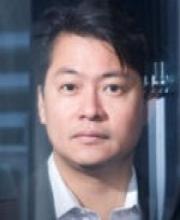
Prof. Tony Ng
Badania naukowe
- obrazowanie ruchliwości komórek nowotworowych przy użyciu technologii FRET / FLIM;
- mechanizmy przerzutowania nowotworów;
- immunologia nowotworów;sieć interakcji między białkami;
- selektywne hamowanie aktywności wybranych receptorów, związanych z nowotworzeniem
Prof. Tony Ng ma unikalną wiedzę i praktyczne umiejętności łączące wiele dziedzin badań medycznych, jak immunologię, biologię nowotworów, biochemię, obrazowanie optyczne i biofizykę komórkową. Połączenie wiedzy klinicznej z badaniami podstawowymi pozwala mu na zastosowanie multidyscyplinarnego podejścia w celu zrozumienia mechanizmów przerzutowania nowotworów. Profesor Ng kieruje interdyscyplinarnym zespołem badawczym w King's College London (KCL), który w prowadzeniu translacyjnych badań onkologicznych wykorzystuje szerokie spektrum wiedzy w dziedzinie biologii, chemii, matematyki oraz fizyki. Profesor Ng Jest uznanym pionierem w dziedzinie obrazowania molekularnego nowotworów (o wysokiej rozdzielczości i w szerokim zakresie, od całego ciała do obrazowania nanoskopowego). W celu zindywidualizowania terapii przeciwnowotworowych łączy analizy proteomiczne i genetyczne tkanek nowotworowych oraz egzosomów z najnowszymi technikami obrazowania klinicznego. Niedawno rozwinął technikę znakowania i śledzenia wybranych cząsteczek, mających znaczenie w progresji nowotworu, za pomocą znaczników radionukleidowych. Ponadto łączy techniki obrazowania FRET (fluorescence energy transfer) oraz FILM (fluorescence life time imaging) z bioinformatyką i modelowaniem sieciowym, dzięki czemu potrafi monitorować modyfikacje białek i oraz oddziaływania między białkami w przestrzeni i czasie. Prof. Ng przyczynił się znacząco do rozwoju Kompleksowego Centrum Obrazowania Raka (Comprehensive Cancer Imaging Centre), które skupia interdyscyplinarne zespoły badawcze z KCL i University College London (UCL), specjalizujące się w obrazowaniu nowotworów i genomice.
Niedawne odkrycia prof. Ng dotyczą także zewnątrzkomórkowych pęcherzyków blonowych w onkologii. Połączenie obrazowania klinicznego tkanek i nowotworu z wszechstronną analizą krążących egzosomów przyczynia się do zindywidualizowania leczenia raka. Zespół prof. Ng wykazał, że pomiar poziomu receptorów HER na egzosomach, techniką obrazowania molekukarnego, jest czynnikiem prognostycznym odpowiedzi na leczenie u pacjentów z rakiem głowy i szyi. Jego zespół wykazał również, że egzosomalna cząsteczka punktu kontrolnego PD-L1 jest częścią ściśle regulowanego mechanizmu nadzoru immunologicznego w przypadku raka piersi i płuc, a poziomy egzosomalnego PD-L1 we krwi korelują z poziomem immunosupresji (Cell Reports. 2018;24:630-641).
Biografia
Tony Ng uzyskał wykształcenie medyczne na University of Aberdeen w Szkocji oraz doktorat z immunologii na Medical College of St. Bartholomew's Hospital w Londynie. Dr Ng uzyskał wsparcie dalszego kształcenia z prestiżowego stypendium Royal College of Pathologists (FRCPath), a następnie został członkiem Royal College of Physicians (MRCP). Dołączył do King's College London jako lider grupy w 2000 roku. Od 2008 roku prof. Ng kieruje finansowanym przez CRUK Kompleksowym Centrum Obrazowania Raka (Comprehensive Cancer Imaging Centre). W 2013 r. Prof. Ng został wybrany członkiem Akademii Nauk Medycznych (FmedSci; Fellow of the Academy of Medical Sciences), a w 2017 r. członkiem Europejskiej Akademii Nauk o Raku (European Academy of Cancer Sciences). Te prestiżowe nagrody zostały przyznane w uznaniu jego doskonałości w badaniach interdyscyplinarnych oraz za wkład w innowacyjne zastosowanie wiedzy naukowej w medycynie.
Obecnie, wśród licznych obowiązków prof. Ng jest kierowanie Kompleksowym Centrum Onkologii (Comprehensive Cancer Centre), współkierowanie Akademią Onkologii i Nauk Farmaceutycznych (School of Cancer and Pharmaceutical Sciences), pełnienie funkcji profesora w dziedzinie badań nad rakiem w KCL (Richard Dimbleby Professor of Cancer Research) oraz profesora Onkologii Molekularnej w UCL Cancer Institute. Prof. Ng jest także członkiem zarządu CRUK City London Centre (https://www.colcc.ac.uk/our-organisation/). Ponadto kieruje projektem Obrazowania Immunologicznego Nowotworów (Tumour Immunology Imaging) w ramach jednostki Breast Cancer Now w KCL (http://breastcancernow.org/breast-cancer-research/our-research-projects…).
Członkowie zespołu
- Deng, Jinhai
- Dr Alfano, Giovanna
- Dr Gomez, Valenti (UCL)
- Dr Mustapha, Rami
- Dr Monypenny of Pitmilly, James
- Dr Vicencio Bustamante, Jose Miguel
- Wong, Felix
- Dr Weitsman, Gregory
- Dr Gordon, Peter
- Dr Barber, Paul
- Dr Ng, Kenrick (UCL)
- Dr Zhengwen, Wenny
- Dr Dolcetti, Luigi
- Zabinski, Tomasz
- Dr Nuo En (Julie) Chan
Publikacje naukowe (10 ostatnich lat)
- Li BT, Michelini F, Misale S, Cocco E, Baldino L, Cai Y, Shifman S, Tu HY, Myers ML, Xu C, et al.: HER2-Mediated Internalization of Cytotoxic Agents in ERBB2 Amplified or Mutant Lung Cancers. Cancer Discov 2020.
- Cho HJ, Switzer CH, Kamynina A, Charles R, Rudyk O, Ng T, Burgoyne JR, Eaton P: Complex interrelationships between nitro-alkene-dependent inhibition of soluble epoxide hydrolase, inflammation and tumor growth. Redox Biol 2020, 29:101405.
- Evans R, Flores-Borja F, Nassiri S, Miranda E, Lawler K, Grigoriadis A, Monypenny J, Gillet C, Owen J, Gordon P, et al.: Integrin-Mediated Macrophage Adhesion Promotes Lymphovascular Dissemination in Breast Cancer. Cell Rep 2019, 27:1967-1978 e1964.
- Barber PR, Weitsman G, Lawler K, Barrett J, Rowley M, Rodriguez-Justo M, Fisher D, Gao F, Tullis IDC, Deng J, et al.: HER2-HER3 heterodimer quantification by FRET-FLIM and patient subclass analysis of the COIN colorectal trial. J Natl Cancer Inst 2019.
- An Z, Flores-Borja F, Irshad S, Deng J, Ng T: Pleiotropic Role and Bidirectional Immunomodulation of Innate Lymphoid Cells in Cancer. Front Immunol 2019, 10:3111.
- Adeleke S, Latifoltojar A, Sidhu H, Galazi M, Shah TT, Clemente J, Davda R, Payne HA, Chouhan MD, Lioumi M, et al.: Localising occult prostate cancer metastasis with advanced imaging techniques (LOCATE trial): a prospective cohort, observational diagnostic accuracy trial investigating whole-body magnetic resonance imaging in radio-recurrent prostate cancer. BMC Med Imaging 2019, 19:90.
- Muliaditan T, Caron J, Okesola M, Opzoomer JW, Kosti P, Georgouli M, Gordon P, Lall S, Kuzeva DM, Pedro L, et al.: Macrophages are exploited from an innate wound healing response to facilitate cancer metastasis. Nat Commun 2018, 9:2951.
- Monypenny J, Milewicz H, Flores-Borja F, Weitsman G, Cheung A, Chowdhury R, Burgoyne T, Arulappu A, Lawler K, Barber PR, et al.: ALIX Regulates Tumor-Mediated Immunosuppression by Controlling EGFR Activity and PD-L1 Presentation. Cell Rep 2018, 24:630-641.
- Johndrow CT, Goldberg MF, Johnson AJ, Ng TW, Kunnath-Velayudhan S, Lauvau G, Kaplan DH, Gossel GH, Kadolsky UD, Yates AJ, et al.: Suppression of Th1 Priming by TLR2 Agonists during Cutaneous Immunization Is Mediated by Recruited CCR2(+) Monocytes. J Immunol 2018, 201:3604-3616.
- Helfen A, Roth J, Ng T, Eisenblaetter M: In Vivo Imaging of Pro- and Antitumoral Cellular Components of the Tumor Microenvironment. J Nucl Med 2018, 59:183-188.
- Claus J, Patel G, Autore F, Colomba A, Weitsman G, Soliman TN, Roberts S, Zanetti-Domingues LC, Hirsch M, Collu F, et al.: Inhibitor-induced HER2-HER3 heterodimerisation promotes proliferation through a novel dimer interface. Elife 2018, 7.
- Zhang R, Fruhwirth GO, Coban O, Barrett JE, Burgoyne T, Lee SH, Simonson PD, Baday M, Kholodenko BN, Futter CE, et al.: Probing the Heterogeneity of Protein Kinase Activation in Cells by Super-resolution Microscopy. ACS Nano 2017, 11:249-257.
- Weitsman G, Mitchell NJ, Evans R, Cheung A, Kalber TL, Bofinger R, Fruhwirth GO, Keppler M, Wright ZVF, Barber PR, et al.: Detecting intratumoral heterogeneity of EGFR activity by liposome-based in vivo transfection of a fluorescent biosensor. Oncogene 2017, 36:3618-3628.
- Suh YE, Lawler K, Henley-Smith R, Pike L, Leek R, Barrington S, Odell EW, Ng T, Pezzella F, Guerrero-Urbano T, et al.: Association between hypoxic volume and underlying hypoxia-induced gene expression in oropharyngeal squamous cell carcinoma. Br J Cancer 2017, 116:1057-1064.
- Ortiz-Zapater E, Lee RW, Owen W, Weitsman G, Fruhwirth G, Dunn RG, Neat MJ, McCaughan F, Parker P, Ng T, et al.: MET-EGFR dimerization in lung adenocarcinoma is dependent on EGFR mtations and altered by MET kinase inhibition. PLoS One 2017, 12:e0170798.
- Lawler K, Papouli E, Naceur-Lombardelli C, Mera A, Ougham K, Tutt A, Kimbung S, Hedenfalk I, Zhan J, Zhang H, et al.: Gene expression modules in primary breast cancers as risk factors for organotropic patterns of first metastatic spread: a case control study. Breast Cancer Res 2017, 19:113.
- Kwo PY, Poordad F, Asatryan A, Wang S, Wyles DL, Hassanein T, Felizarta F, Sulkowski MS, Gane E, Maliakkal B, et al.: Glecaprevir and pibrentasvir yield high response rates in patients with HCV genotype 1-6 without cirrhosis. J Hepatol 2017, 67:263-271.
- Irshad S, Flores-Borja F, Lawler K, Monypenny J, Evans R, Male V, Gordon P, Cheung A, Gazinska P, Noor F, et al.: RORgammat(+) Innate Lymphoid Cells Promote Lymph Node Metastasis of Breast Cancers. Cancer Res 2017, 77:1083-1096.
- Eisenblaetter M, Flores-Borja F, Lee JJ, Wefers C, Smith H, Hueting R, Cooper MS, Blower PJ, Patel D, Rodriguez-Justo M, et al.: Visualization of Tumor-Immune Interaction - Target-Specific Imaging of S100A8/A9 Reveals Pre-Metastatic Niche Establishment. Theranostics 2017, 7:2392-2401.
- Diocou S, Volpe A, Jauregui-Osoro M, Boudjemeline M, Chuamsaamarkkee K, Man F, Blower PJ, Ng T, Mullen GED, Fruhwirth GO: [(18)F]tetrafluoroborate-PET/CT enables sensitive tumor and metastasis in vivo imaging in a sodium iodide symporter-expressing tumor model. Sci Rep 2017, 7:946.
- Bosch-Vilaro A, Jacobs B, Pomella V, Abbasi Asbagh L, Kirkland R, Michel J, Singh S, Liu X, Kim P, Weitsman G, et al.: Feedback activation of HER3 attenuates response to EGFR inhibitors in colon cancer cells. Oncotarget 2017, 8:4277-4288.
- Wulaningsih W, Holmberg L, Ng T, Rohrmann S, Van Hemelrijck M: Serum leptin, C-reactive protein, and cancer mortality in the NHANES III. Cancer Med 2016, 5:120-128.
- Wulaningsih W, Holmberg L, Garmo H, Karagiannis SN, Ahlstedt S, Malmstrom H, Lambe M, Hammar N, Walldius G, Jungner I, et al.: Investigating the association between allergen-specific immunoglobulin E, cancer risk and survival. Oncoimmunology 2016, 5:e1154250.
- Wulaningsih W, Holmberg L, Abeler-Doner L, Ng T, Rohrmann S, Van Hemelrijck M: Associations of C-Reactive Protein, Granulocytes and Granulocyte-to-Lymphocyte Ratio with Mortality from Breast Cancer in Non-Institutionalized American Women. PLoS One 2016, 11:e0157482.
- Weitsman G, Barber PR, Nguyen LK, Lawler K, Patel G, Woodman N, Kelleher MT, Pinder SE, Rowley M, Ellis PA, et al.: HER2-HER3 dimer quantification by FLIM-FRET predicts breast cancer metastatic relapse independently of HER2 IHC status. Oncotarget 2016, 7:51012-51026.
- Kucharski TJ, Ng TF, Sharon DM, Navid-Azarbaijani P, Tavassoli M, Teodoro JG: Activation of the Chicken Anemia Virus Apoptin Protein by Chk1/2 Phosphorylation Is Required for Apoptotic Activity and Efficient Viral Replication. J Virol 2016, 90:9433-9445.
- Flores-Borja F, Irshad S, Gordon P, Wong F, Sheriff I, Tutt A, Ng T: Crosstalk between Innate Lymphoid Cells and Other Immune Cells in the Tumor Microenvironment. J Immunol Res 2016, 2016:7803091.
- Arulappu A, Battle M, Eisenblaetter M, McRobbie G, Khan I, Monypenny J, Weitsman G, Galazi M, Hoppmann S, Gazinska P, et al.: c-Met PET Imaging Detects Early-Stage Locoregional Recurrence of Basal-Like Breast Cancer. J Nucl Med 2016, 57:765-770.
- Wulaningsih W, Holmberg L, Garmo H, Malmstrom H, Lambe M, Hammar N, Walldius G, Jungner I, Ng T, Van Hemelrijck M: Serum lactate dehydrogenase and survival following cancer diagnosis. Br J Cancer 2015, 113:1389-1396.
- Poland SP, Krstajic N, Monypenny J, Coelho S, Tyndall D, Walker RJ, Devauges V, Richardson J, Dutton N, Barber P, et al.: A high speed multifocal multiphoton fluorescence lifetime imaging microscope for live-cell FRET imaging. Biomed Opt Express 2015, 6:277-296.
- Nuciforo P, Radosevic-Robin N, Ng T, Scaltriti M: Quantification of HER family receptors in breast cancer. Breast Cancer Res 2015, 17:53.
- Nedbal J, Visitkul V, Ortiz-Zapater E, Weitsman G, Chana P, Matthews DR, Ng T, Ameer-Beg SM: Time-domain microfluidic fluorescence lifetime flow cytometry for high-throughput Forster resonance energy transfer screening. Cytometry A 2015, 87:104-118.
- Fang EF, Scheibye-Knudsen M, Jahn HJ, Li J, Ling L, Guo H, Zhu X, Preedy V, Lu H, Bohr VA, et al.: A research agenda for aging in China in the 21st century. Ageing Res Rev 2015, 24:197-205.
- Coban O, Zanetti-Dominguez LC, Matthews DR, Rolfe DJ, Weitsman G, Barber PR, Barbeau J, Devauges V, Kampmeier F, Winn M, et al.: Effect of phosphorylation on EGFR dimer stability probed by single-molecule dynamics and FRET/FLIM. Biophys J 2015, 108:1013-1026.
- Cade NI, Fruhwirth GO, Krasavin AV, Ng T, Richards D: Fluorescence axial nanotomography with plasmonics. Faraday Discuss 2015, 178:371-381.
- Burgoyne JR, Rudyk O, Cho HJ, Prysyazhna O, Hathaway N, Weeks A, Evans R, Ng T, Schroder K, Brandes RP, et al.: Deficient angiogenesis in redox-dead Cys17Ser PKARIalpha knock-in mice. Nat Commun 2015, 6:7920.
- Bullenkamp J, Gaken J, Festy F, Chong EZ, Ng T, Tavassoli M: Apoptin interacts with and regulates the activity of protein kinase C beta in cancer cells. Apoptosis 2015, 20:831-842.
- Weitsman G, Lawler K, Kelleher MT, Barrett JE, Barber PR, Shamil E, Festy F, Patel G, Fruhwirth GO, Huang L, et al.: Imaging tumour heterogeneity of the consequences of a PKCalpha-substrate interaction in breast cancer patients. Biochem Soc Trans 2014, 42:1498-1505.
- Linch M, Riou P, Claus J, Cameron AJ, de Naurois J, Larijani B, Ng T, McDonald NQ, Parker PJ: Functional implications of assigned, assumed and assembled PKC structures. Biochem Soc Trans 2014, 42:35-41.
- Kiuchi T, Ortiz-Zapater E, Monypenny J, Matthews DR, Nguyen LK, Barbeau J, Coban O, Lawler K, Burford B, Rolfe DJ, et al.: The ErbB4 CYT2 variant protects EGFR from ligand-induced degradation to enhance cancer cell motility. Sci Signal 2014, 7:ra78.
- Fruhwirth GO, Diocou S, Blower PJ, Ng T, Mullen GE: A whole-body dual-modality radionuclide optical strategy for preclinical imaging of metastasis and heterogeneous treatment response in different microenvironments. J Nucl Med 2014, 55:686-694.
- Devauges V, Matthews DR, Aluko J, Nedbal J, Levitt JA, Poland SP, Coban O, Weitsman G, Monypenny J, Ng T, et al.: Steady-state acceptor fluorescence anisotropy imaging under evanescent excitation for visualisation of FRET at the plasma membrane. PLoS One 2014, 9:e110695.
- Chowdhury R, Ganeshan B, Irshad S, Lawler K, Eisenblatter M, Milewicz H, Rodriguez-Justo M, Miles K, Ellis P, Groves A, et al.: The use of molecular imaging combined with genomic techniques to understand the heterogeneity in cancer metastasis. Br J Radiol 2014, 87:20140065.
- Beck S, Ng T: C2c: turning cancer into chronic disease. Genome Med 2014, 6:38.
- Vermeer LS, Fruhwirth GO, Pandya P, Ng T, Mason AJ: NMR metabolomics of MTLn3E breast cancer cells identifies a role for CXCR4 in lipid and choline regulation. J Proteome Res 2012, 11:2996-3003.
- Shayeghi N, Ng T, Coolen AC: Direct Response Analysis in cellular signalling networks. J Theor Biol 2012, 304:219-225.
- Matthews DR, Fruhwirth GO, Weitsman G, Carlin LM, Ofo E, Keppler M, Barber PR, Tullis ID, Vojnovic B, Ng T, et al.: A multi-functional imaging approach to high-content protein interaction screening. PLoS One 2012, 7:e33231.
- Vega FM, Fruhwirth G, Ng T, Ridley AJ: RhoA and RhoC have distinct roles in migration and invasion by acting through different targets. J Cell Biol 2011, 193:655-665.
- Patel GS, Kiuchi T, Lawler K, Ofo E, Fruhwirth GO, Kelleher M, Shamil E, Zhang R, Selvin PR, Santis G, et al.: The challenges of integrating molecular imaging into the optimization of cancer therapy. Integr Biol (Camb) 2011, 3:603-631.
- Kudsiova L, Ho J, Fridrich B, Harvey R, Keppler M, Ng T, Hart SL, Tabor AB, Hailes HC, Lawrence MJ: Lipid chain geometry of C14 glycerol-based lipids: effect on lipoplex structure and transfection. Mol Biosyst 2011, 7:422-436.
- Kudsiova L, Fridrich B, Ho J, Mustapa MF, Campbell F, Welser K, Keppler M, Ng T, Barlow DJ, Tabor AB, et al.: Lipopolyplex ternary delivery systems incorporating C14 glycerol-based lipids. Mol Pharm 2011, 8:1831-1847.
- Fruhwirth GO, Fernandes LP, Weitsman G, Patel G, Kelleher M, Lawler K, Brock A, Poland SP, Matthews DR, Keri G, et al.: How Forster resonance energy transfer imaging improves the understanding of protein interaction networks in cancer biology. Chemphyschem 2011, 12:442-461.
- Carlin LM, Evans R, Milewicz H, Fernandes L, Matthews DR, Perani M, Levitt J, Keppler MD, Monypenny J, Coolen T, et al.: A targeted siRNA screen identifies regulators of Cdc42 activity at the natural killer cell immunological synapse. Sci Signal 2011, 4:ra81.
- Heasman SJ, Carlin LM, Cox S, Ng T, Ridley AJ: Coordinated RhoA signaling at the leading edge and uropod is required for T cell transendothelial migration. J Cell Biol 2010, 190:553-563.
- Fruhwirth GO, Ameer-Beg S, Cook R, Watson T, Ng T, Festy F: Fluorescence lifetime endoscopy using TCSPC for the measurement of FRET in live cells. Opt Express 2010, 18:11148-11158.
- Carlin LM, Makrogianneli K, Keppler M, Fruhwirth GO, Ng T: Visualisation of signalling in immune cells. Methods Mol Biol 2010, 616:97-113.
- Cade NI, Fruhwirth G, Archibald SJ, Ng T, Richards D: A cellular screening assay using analysis of metal-modified fluorescence lifetime. Biophys J 2010, 98:2752-2757.